What does a hearing aid cost to run each year
Quick answer
Running costs are usually far smaller than people expect: for most wearers batteries, domes and wax guards together come to well under $200 a year. A rechargeable device removes the battery line entirely and replaces it with an eventual battery service.
Annual running cost
Costs are calculated from the actual prices in this catalog at the lowest cost per unit, and from the replacement intervals on the reference pages. Prices move constantly.
Enter values above to see the answer.
Equipment this answer points to
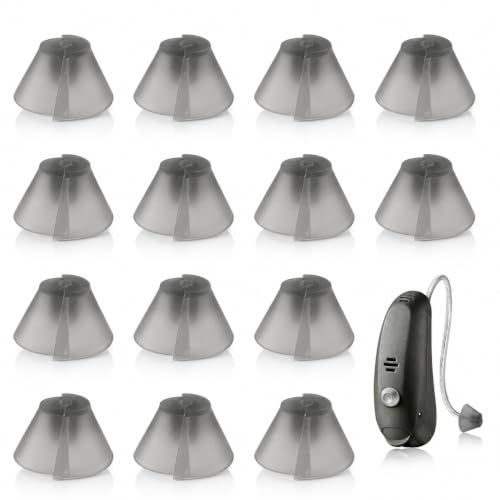
Tulip domes for Resound and Jabra, 14 count
$7.99A tulip dome sits between open and closed: more retention and more usable gain than an open dome, less occlusion than a sealed one. The usual answer when neither extreme is working.
Check before buying: Compatible parts, not made by GN Resound or Jabra.
Best for: Jabra Enhance and GN Resound wearers who find open domes too thin and closed domes too blocked.
Check price on Amazon
Wax guards for Signia, original Sivantos part
$8.91An original manufacturer part for Signia miniReceivers, which is worth preferring on a component this small and this precisely fitted.
Best for: Signia wearers.
Check price on Amazon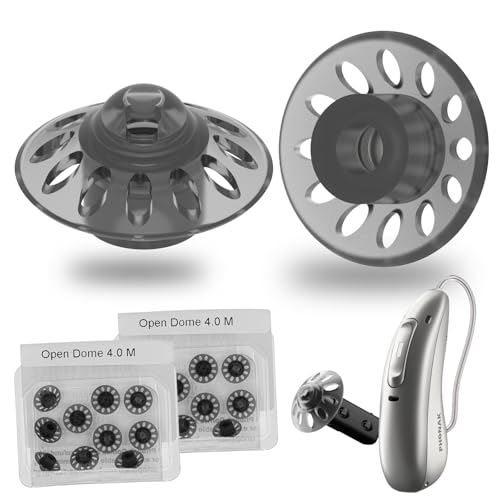
Open domes for Phonak, 9 mm, 20 count
$9.99 Published specsOpen domes vent the ear canal the most, which keeps the natural low-frequency sound and the most normal sounding own voice. The right choice when hearing in the low frequencies is good and the loss is concentrated higher up.
Check before buying: Compatible parts, not made by Phonak. Dome fittings differ between manufacturers and even between model generations, so check the fitting on the part you are replacing before ordering.
Best for: Phonak Audeo Marvel, Paradise and Lumity wearers with high-frequency loss.
Check price on Amazon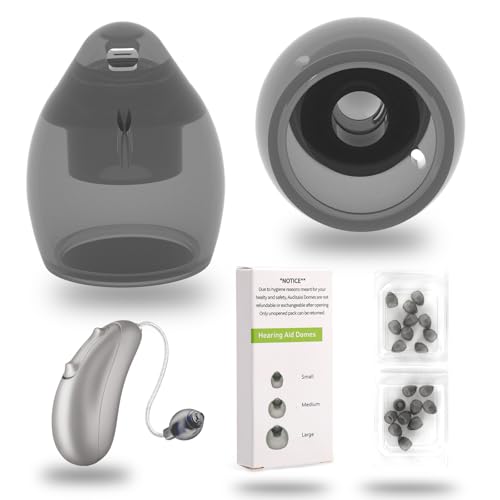
Vented domes for Phonak, 7.5 mm small, 20 count
$9.99 Published specsThe small size in the Vented 4.0 fitting, for a canal that an 8 or 9 millimetre dome will not sit in comfortably.
Check before buying: Compatible parts, not made by Phonak.
Best for: A narrow canal, or the ear that always feels tighter than the other one.
Check price on AmazonCommon questions
- Does this include the cost of the hearing aid?
- No. This is the recurring cost of running a pair for a year: batteries, domes and wax guards. The device itself is a one-off purchase and the setups pages cover those totals. It also excludes a hearing evaluation, any professional fitting, repairs, and insurance, all of which vary too much to estimate.
- Is a rechargeable device cheaper to run?
- On consumables, yes: it removes the battery line entirely, which is usually the largest recurring cost. The offsetting item is that the built-in battery eventually needs replacing, and that is a service carried out by the manufacturer or a provider rather than something bought off a shelf. The two roughly balance over several years.
- Why does earwax level change the cost?
- Because it sets how often wax guards block, and that varies by more than a factor of ten between people. Someone changing a guard weekly gets through around a hundred a year for a pair; someone changing them every three months gets through eight. Guards are cheap individually, so even the heavy case is a modest sum.
- Should I buy consumables in bulk?
- For batteries, generally yes, since zinc-air cells carry a stated shelf life of several years and the cost per cell falls sharply with pack size. For domes and wax guards it matters less, and buying a small pack first is sensible because if you change devices the parts are frequently not compatible with the new one.
- What about a dryer, is that a running cost?
- A desiccant jar is effectively free to run because the desiccant is reactivated in an oven and reused for years. An electronic dryer uses a negligible amount of electricity. Both are one-off purchases rather than recurring costs, which is why they are not counted here, and both are cheap against the repair they prevent.
Get the complete hearing gear list
Every item in the starter, everyday and full setups, with running totals, in one printable list. It opens with a hearing evaluation, because that is genuinely the first step. No charge.
One list, no sequence of daily emails, and you can leave at any time.