How long is this noise level safe for
Quick answer
Enter a level in decibels A-weighted to get the permissible exposure time under both United States standards. NIOSH recommends 85 dBA over eight hours with a 3 decibel exchange rate; OSHA enforces 90 dBA with a 5 decibel exchange rate, which allows substantially longer at the same level.
Noise exposure time
Below 70 dBA there is no meaningful limit to state, and above 140 dBA the relevant guidance is about impulse noise and immediate damage rather than a duration, so no time is returned outside that range.
Enter values above to see the answer.
Equipment this answer points to

ProCase ear defenders, 33 dB SNR
$11.99The cheapest protection here, and adequate protection bought is better than excellent protection not bought.
Check before buying: The 33 figure is an SNR, the European rating, not an NRR. SNR figures run a few decibels higher than NRR figures for the same product, so this is not directly comparable with the 34 NRR muff above.
Best for: A spare pair for the shed, or protection for a visitor.
Check price on Amazon
RISEPRO digital sound level meter
$16.90The cheapest meter here, and adequate for the question most people are asking, which is whether a room is above or below 85 dBA.
Best for: A one-off check rather than ongoing monitoring.
Check price on Amazon
Hearprotek concert earplugs, two pairs
$16.99Two pairs at under seventeen dollars, which is the cheapest honest entry into filtered protection.
Best for: A first pair, and a spare, before spending forty dollars on something that may not fit.
Check price on Amazon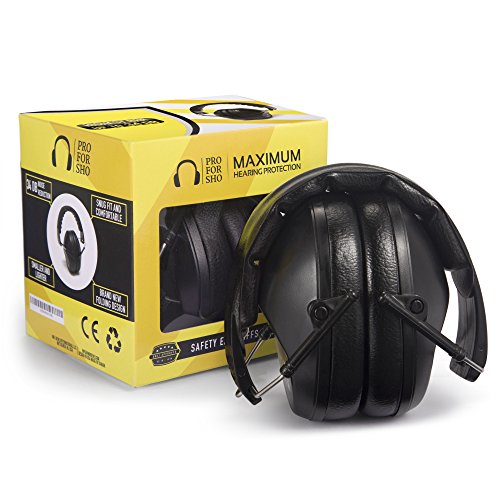
Pro For Sho ear defenders, 34 dB NRR
$19.99A 34 decibel Noise Reduction Rating, at the top of what passive muffs achieve, in a slim shell that fits under a helmet.
Check before buying: The NRR figure comes from a laboratory fit. Real world reduction is reliably lower, and a muff worn over glasses arms or long hair loses several decibels of it.
Best for: Chainsaws, mowing and workshop work, where the NIOSH tables say protection is genuinely needed.
Check price on AmazonCommon questions
- Which standard should I use?
- NIOSH is the more protective recommendation and is what hearing conservation practice generally follows. OSHA is the legally enforceable workplace limit in the United States and permits considerably longer exposure at the same level. If you are protecting your own hearing rather than meeting a regulation, the NIOSH figure is the more useful one.
- What is an exchange rate?
- It is the increase in level that halves the permissible exposure time. Under the NIOSH 3 decibel exchange rate, 85 dBA allows eight hours, 88 allows four, 91 allows two and 94 allows one. Under the OSHA 5 decibel rate the same halving takes 5 decibels, which is the whole reason the two standards diverge so widely at high levels.
- Does exposure at different levels add up?
- Yes. These are time weighted averages across a working day rather than limits on a single moment, so exposure at several levels combines. A short burst at a high level uses up a disproportionate share of the daily allowance, which is why a few minutes with a power tool can matter as much as hours of moderate background noise.
- Does hearing protection subtract its rating from the level?
- Not in practice. Noise reduction ratings come from a laboratory fit and real world reduction is reliably lower, sometimes by half. Fit determines actual protection: a muff worn over glasses arms or long hair loses several decibels, and an unsealed earplug provides very little. Wearing protection consistently matters more than the number on the box.
- What if my ears ring after an event?
- That is a signal the exposure was too much. Temporary ringing or muffled hearing after a loud event usually settles within a day or two. If it does not, or if hearing loss comes on suddenly at any time, contact a doctor promptly. Sudden hearing loss is treated as urgent and the window in which treatment is usually attempted is measured in days.
Get the complete hearing gear list
Every item in the starter, everyday and full setups, with running totals, in one printable list. It opens with a hearing evaluation, because that is genuinely the first step. No charge.
One list, no sequence of daily emails, and you can leave at any time.