The best hearing aid dryers and cleaning kits
Quick answer
The best all-around hearing aid dryer is the Audinell PerfectDry Q.R. 45 at $44.00, a dedicated electronic dryer with a 45 minute cycle short enough to actually get used every day. Pair it with the Hearing aid cleaning kit, 12 piece at $12.09, since moisture and earwax are two separate problems that both need addressing.
Moisture and earwax account for most of the faults that make a hearing aid appear to have broken outright, and both are addressed by equipment that costs a fraction of a repair. Overnight drying removes the moisture a device collects from perspiration and humidity during the day; electronic dryers run a warm cycle and often add an ultraviolet lamp, while desiccant jars do the same job more slowly with no power and no moving parts. Cleaning tools handle the other half of the problem: a brush, a wax loop and a vent cleaner cover almost everything, and a dedicated vacuum handles what a brush cannot.
The six picks below split into Beginner, Intermediate and Expert tiers by how much equipment a given device and wearer actually need, not by which product is objectively best. For the daily routine behind these tools, see how to clean and care for hearing aids.
The picks

Hearing aid cleaning kit, 12 piece
$12.09Brush, wax loop, magnet and vent cleaner in one case, covering the daily routine for the price of a single pack of batteries.
Best for: The basic kit everyone should own; the magnet alone earns it back the first time a battery is dropped.
Check price on Amazon
Hal-Hen Super Dri-Aid desiccant jar
$21.60A desiccant jar with no power, no lamp and nothing to fail. The desiccant is reactivated in an oven and used again, which is why one jar lasts for years.
Best for: Travel, a second home, or anyone who would rather not add another mains device to the nightstand.
Check price on Amazon
Audinell PerfectDry Q.R. 45
$44.00A 45 minute cycle that fits into an evening rather than requiring overnight, from a maker that specializes in hearing aid care specifically rather than adapting a general purpose dryer.
Best for: Someone who takes their devices out at different times each day and wants drying to actually happen rather than get skipped.
Check price on Amazon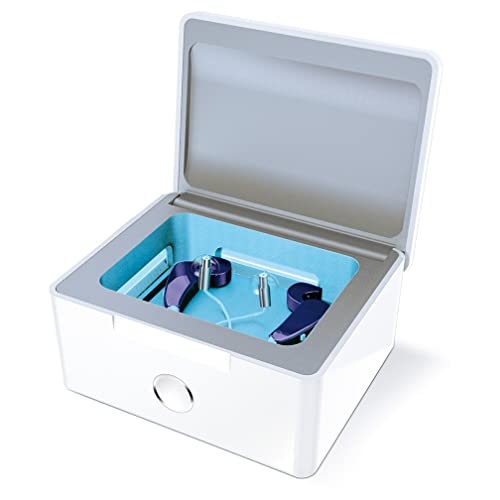
Audinell PerfectDry LUX
$58.99A short drying cycle with a UV-C lamp added, from the same specialist maker as the Q.R. 45.
Best for: Daily overnight drying for either a rechargeable or battery powered device.
Check price on Amazon
Flow Med Dry-Cap UV2
$112.95Designed specifically around rechargeable hearing aids, which most dryers get wrong: a rechargeable aid cannot have its battery door left open the way a battery device can, making drying it a different problem entirely.
Best for: A rechargeable pair specifically, not a battery powered device.
Check price on Amazon
Redux Ultra Dry and Charge
$299.00Drying and charging in one unit, from the company whose professional drying equipment sits in audiology clinics. The most expensive item in this category by a wide margin.
Check before buying: At $299 this costs more than several of the hearing aids in this catalog. It makes sense against an expensive pair and very little sense against a $129 device.
Best for: Protecting a four figure pair of devices with one unit on the nightstand instead of two.
Check price on AmazonHow the tiers compare
Price runs from $12.09 for tools with no drying function to $299.00 for a combined drying and charging unit.
| Model | Tier | Price | Drying method |
|---|---|---|---|
| Hearing aid cleaning kit, 12 piece | Beginner | $12.09 | Manual tools, no drying |
| Hal-Hen Super Dri-Aid jar | Beginner | $21.60 | Desiccant, no power |
| Audinell PerfectDry Q.R. 45 | Intermediate | $44.00 | Electronic, 45 minute cycle |
| Audinell PerfectDry LUX | Intermediate | $58.99 | Electronic, UV-C, short cycle |
| Flow Med Dry-Cap UV2 | Expert | $112.95 | Electronic, UV-C, rechargeable-specific |
| Redux Ultra Dry and Charge | Expert | $299.00 | Electronic drying and charging combo |
Buying tips
Cleaning and drying solve two different problems and neither substitutes for the other. Earwax is removed with tools, never with moisture, and moisture is removed overnight or by a short electronic cycle, never with a brush. For wax that a brush and loop cannot clear, Jodi-Vac hearing aid vacuum draws wax out of a receiver port rather than pushing it further in, which is the entire point: a brush can compact a blockage that a vacuum removes cleanly. Hearing aid cleaning wipes, 120 count handles the outside of the shell and dome for a daily wipe-down, but nothing wet belongs anywhere near a receiver port or a microphone opening.
A hard case is the cheapest insurance in this entire category. Hard shell hearing aid case costs $8.99 against a four figure pair of hearing aids, and the most common way an expensive device is lost is being set down on a nightstand or wrapped in a tissue rather than being dropped. Hard shell case for Signia devices is shaped specifically for Signia devices and their accessories if that is what you wear.
Who should not buy the Expert tier: the $299.00 Redux Ultra Dry and Charge costs more than several of the hearing aids in this catalog and makes very little sense against a $129 device. It earns its price against an expensive rechargeable pair and nowhere else; most wearers are better served by an Intermediate tier electronic dryer at a fraction of the cost.
How we chose
We compared manufacturer published specifications, the FDA device classification each product is sold under, and the recurring themes in verified owner reviews. We do not test hearing devices in person and we never claim to, because a hearing device is fitted to one person's ears and a reviewer's experience of one would tell you nothing about yours.
What we exclude, and why it is most of the category. Amazon results for "hearing aids" are dominated by unbranded amplifiers listed as over the counter hearing aids. A personal sound amplification product is not an FDA regulated hearing aid, and the FDA states plainly that it is not intended to compensate for hearing loss. Products with no identifiable manufacturer, products whose stated brand and title disagree, and products quoting a gain figure as though it were a published specification are left out. Honest personal amplifiers are carried in their own separate category and are labelled as such on every card.
We make no claim about how much any device will improve anyone's hearing. That is an outcome about a person, not a property of a product, and nobody selling one can tell you it either.
Common questions
- Does drying a hearing aid overnight actually make a difference?
- Moisture from perspiration and humidity is one of the two most common causes of a hearing aid that appears to have failed, alongside earwax blockage. Removing that moisture overnight, either with an electronic dryer or a desiccant jar, is standard practice precisely because it addresses a real and common cause of intermittent or dead-sounding devices.
- What is the difference between a desiccant jar and an electronic dryer?
- A desiccant jar uses a moisture-absorbing material with no power source, reactivated in an oven and reused for years; it is slower but has nothing to fail. An electronic dryer runs a warm air cycle, often with an added ultraviolet lamp, and finishes in under an hour on some models, which makes it more likely to actually get used every night.
- Can I dry a rechargeable hearing aid the same way as a battery powered one?
- Not always. A rechargeable device cannot have its battery door left open the way a battery powered device can, which changes how a dryer needs to be built around it. The Flow Med Dry-Cap UV2 above is specifically designed for rechargeable devices for this reason; check that any dryer you consider states it fits your device type.
- Is a wax vacuum different from a cleaning brush?
- Yes, and the difference matters. A brush can push wax further into a receiver port if a blockage has already formed, while a vacuum draws wax out instead. A vacuum is worth adding for anyone whose devices block repeatedly, in addition to, not instead of, the basic brush and wax loop kit.
- My hearing aid still sounds muffled after cleaning and drying, what now?
- That combination usually points to a wax guard that needs replacing rather than a cleaning or moisture problem you can fix at home, since a blocked guard restores sound the moment it is changed. If replacing the wax guard does not resolve it, the device likely needs professional service rather than more cleaning equipment.
Get the complete hearing gear list
Every item in the starter, everyday and full setups, with running totals, in one printable list. It opens with a hearing evaluation, because that is genuinely the first step. No charge.
One list, no sequence of daily emails, and you can leave at any time.
Last updated 2026-09-17.